Thu, Jan 29, 2026
Volume 35, Issue 1 (1-2025)
JHNM 2025, 35(1): 11-20 |
Back to browse issues page



Download citation:
BibTeX | RIS | EndNote | Medlars | ProCite | Reference Manager | RefWorks
Send citation to:


BibTeX | RIS | EndNote | Medlars | ProCite | Reference Manager | RefWorks
Send citation to:
Foroughizad F, Yaghobi Y, Sheikholeslami F, Faraji-Nesfechi E, KazemnezhadLeili E. Knowledge and Attitude Towards the Care For Self-harming Adolescents and the Related Factors in Emergency Department Nurses From Northern Iran. JHNM 2025; 35 (1) :11-20
URL: http://hnmj.gums.ac.ir/article-1-2399-en.html
URL: http://hnmj.gums.ac.ir/article-1-2399-en.html
Fereshteh Foroughizad1 

 , Yasaman Yaghobi *2 , Farzaneh Sheikholeslami3 , Elnaz Faraji-Nesfechi4 , Ehsan KazemnezhadLeili5
, Yasaman Yaghobi *2 , Farzaneh Sheikholeslami3 , Elnaz Faraji-Nesfechi4 , Ehsan KazemnezhadLeili5
1- Nursing (MsN), 17 Shahrivar Educational-Medical Center, Guilan University of Medical Sciences, Rasht, Iran.
2- Assistant Professor, Department of Nursing, School of Nursing and Midwifery, Guilan University of Medical Sciences, Rasht, Iran. ,yaghobiyasaman@yahoo.com
3- Instructor, Department of Nursing, School of Nursing and Midwifery, Guilan University of Medical Sciences, Rasht, Iran.
4- Nursing (MsN), Department of Nursing, School of Nursing and Midwifery, Guilan University of Medical Sciences, Rasht, Iran.
5- Associate Professor, Department of Biostatistics and Epidemiology, School of Health, Guilan University of Medical Sciences, Rasht, Iran.
2- Assistant Professor, Department of Nursing, School of Nursing and Midwifery, Guilan University of Medical Sciences, Rasht, Iran. ,
3- Instructor, Department of Nursing, School of Nursing and Midwifery, Guilan University of Medical Sciences, Rasht, Iran.
4- Nursing (MsN), Department of Nursing, School of Nursing and Midwifery, Guilan University of Medical Sciences, Rasht, Iran.
5- Associate Professor, Department of Biostatistics and Epidemiology, School of Health, Guilan University of Medical Sciences, Rasht, Iran.
Full-Text [PDF 505 kb]
(588 Downloads)
| Abstract (HTML) (1017 Views)
Full-Text: (511 Views)
Introduction
Self-harm includes any self-inflicted injury or attempt to harm on oneself [1]. Non-suicidal self-injury refers to behaviors consciously and directly performed by the individual to harm body tissues without suicidal intent [2]. Adolescents engage in self-harming behaviors to regulate their current emotions. Self-harm is a way to cope with unbearable psychological pain or regain a sense of emotional balance [1, 2]. The rate of self-harm among children and young people is 7-14% [3]. In the United States, approximately 500,000 patients are admitted to emergency departments (EDs) annually due to deliberate self-harm [4]. In Northern Iran, a study reported a self-harm incidence rate of 54.9% among adolescents [5]. Another study in Iran found a self-harm prevalence of 12.3% among adolescents [6].
To reduce the risk of self-harm, it is important to identify the risk factors [7]. Adolescence is a developmental period characterized as a time of impulsive and risky choices, leading to an increased incidence of unintentional injury and violence [8, 9, 10]. Self-harming behaviors increase the serotonin and endorphin levels, resulting in feelings of pleasure and repetitive behavior [11]. Various factors, including environmental factors, family, friends, and genetic predisposition, may have a role in adolescents’ susceptibility to self-harming behaviors. There is evidence linking childhood trauma to a history of self-harm in adolescence [12, 13]. The risk of repeated self-harm is 18 times higher in individuals with a history of self-harm compared to the general population [13]. The complications of self-harm in adolescents include financial burdens on the healthcare system and significant on-time service delivery demands, as well as substantial psychological pressure on the affected families [14].
Nurses are an important part of the healthcare team, particularly in the EDs. Neglecting nurses’ education and attitudes towards self-harming patients can negatively affect the delivery of care and patient safety [15, 16]. Nurses’ attitudes towards self-harming patients and their knowledge of the issue can significantly influence their performance and patient outcomes [16]. The standard level of service management for adolescents with self-harm and the result of care are directly related to the knowledge and attitudes of nurses [17]. Therefore, sufficient knowledge and a positive attitude are necessary for delivering effective care to self-harming adolescents [18]. Various factors, including confidence in patient assessment, ability to effectively deal with patients, empathy, and ability to comply with hospital rules, can create a positive attitude in nurses [19].
The ED nurses should have a positive attitude, mutual understanding, and sufficient knowledge to treat self-harming adolescents professionally and appropriately upon admission [20, 21]. Caring for self-harming adolescents is emotionally challenging for nurses, and ambivalence, powerlessness, and inefficacy are often seen in negative attitudes towards these patients [20]. Given the importance of nurses’ attitudes and knowledge in providing care for self-harming adolescents, this study aims to determine the knowledge and attitudes of ED nurses in Rasht, Iran, regarding the care for self-harming adolescents and find the related factors.
Materials and Methods
This is an analytical cross-sectional study conducted from February to April 2021. The study population consisted of all nurses working in the ED of hospitals in Rasht, Iran. The required sample size was determined 249 based on the study by Letho et al. [17] and using the sample size formula based on a correlation by considering r=0.25, 95% confidence interval, and 90% test power. However, since the sampling included the whole population, 208 eligible nurses were included in the study. The inclusion criteria were: Having a bachelor’s or master’s degree, at least 6 months of work experience in the ED and willingness to participate in the study.
The study used a three-part questionnaire. The first part surveys demographic characteristics (age, gender, marital status, number of children, experience in caring for self-harming patients, work experience, educational degree). The second part was a knowledge scale developed by Letho et al. [17] included 24 items and four domains: Incidence (5 items), risk factors (4 items), management (5 items), and suicide prevention measures (7 questions). A score of 0 was for incorrect answers, while 1 was for correct answers. The total score ranges from 0 to 21. A score of 0-7 indicates low knowledge; 8-14, moderate knowledge; and 15-21, high knowledge. The third part was the attitudes towards deliberate self-harm questionnaire (ADSHQ) developed by McAllister et al. [13]. It has 29 items scored on a Likert scale and four domains, including: a) Perceived confidence in assessment and referral, (9 items) with a score range of 9-45, where a score of 9-22 indicates low confidence and a score of 23-37 shows high confidence; b) Ability to deal effectively with clients (6 items) with a score range of 6-24, where a score of 6-10 indicates low ability and a score of 11-24 shows high ability; c) Empathic approach (9 items) had a score range of 9-45, where a score of 9-21 indicates low ability and a score of 22-43 shows high ability; d) Ability to cope effectively with legal and hospital regulations that guide practice (5 items) with a score range of 5-25, where a score of 5-12 indicates low compliance and a score of 13-25 shows high compliance.
The knowledge and attitude items were adapted from the article by Leto and McAllister and a review of the literature, respectively. The number of items used in these tools was reduced due to the lack of conformity of some parts with respect to the cultural context of Iran. In the knowledge tool, 3 questions were removed. Of course, all steps were communicated to Leto and colleagues through correspondence. Similarly, 4 questions were removed from the attitude items. Therefore, after adjusting the items, their validity and reliability were also taken. In the present study, a qualitative and quantitative approach was used to determine the content validity. For this purpose, the questionnaire was reviewed by 10 expert professors of the nursing department (faculty members of the School of Nursing and Midwifery and experts in the fields of medical education, psychiatric nursing, pediatric nursing, internal and surgical nursing). In order to determine the content validity using a qualitative method, the professors were asked to provide their corrective comments in writing regarding the clarity and simplicity of the questionnaires. After collecting and reviewing the comments by the research team, the necessary changes were made to the instruments. To determine the content validity of the knowledge and attitude instrument quantitatively, Lawshe content validity ratio [22] and Waltz and Bassel’s content validity index [22] were used. After calculating the content validity ratio, it was determined that this value was greater than 0.62 for all items in the questionnaire and no items were deleted. After calculating the content validity ratio, the content validity index of the knowledge and attitude questionnaire was >0.88, therefore it is acceptable. [22]. The average CVI for the Persian versions of the two questionnaires were 0.97 and 0.95, respectively. For reliability, the test-retest method was used for the knowledge scale and ADSHQ. The intraclass correlation coefficient (ICC) for the Persian versions of the knowledge scale and ADSHQ were 0.89 and 0.86, respectively (P=0.001).
The data were collected after visiting the hospitals during all three work shifts (morning, afternoon, and night). The collected data were analyzed using descriptive and inferential statistics. The Kolmogorov-Smirnov test was used to test the normality of data distribution. Since the variables did not follow a normal distribution, non-parametric tests (Mann-Whitney U test and Kruskal-Wallis test) were employed. The Spearman correlation test was used to determine correlations, and multiple logistic regression models were used to adjust the effects of individual and organizational variables. The significance level was set at 0.05.
Results
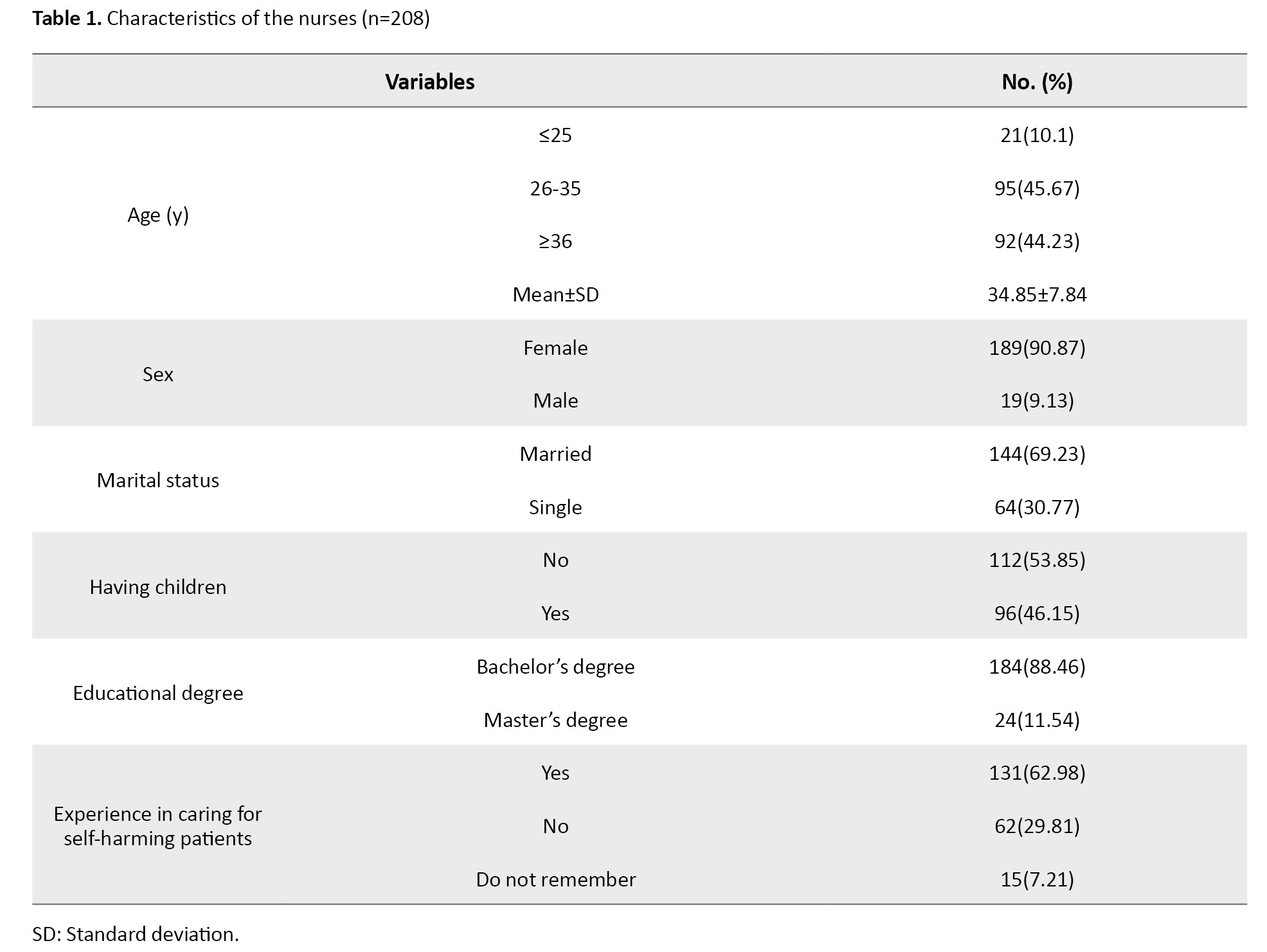
The mean age of the participants was 34.8±7.8 years. The majority of them were female (90.9%) and married (69.2%). Also, 46.2% had children. The majority (88.5%) had a bachelor’s degree, while only 11.5% had a master’s degree. Most of the nurses (63%) had experience in caring for self-harming adolescents (Table 1).
Furthermore, most of the nurses (53.85%) had a moderate knowledge of self-harming in adolescents, and 46.16% had a high level of knowledge (Table 2).
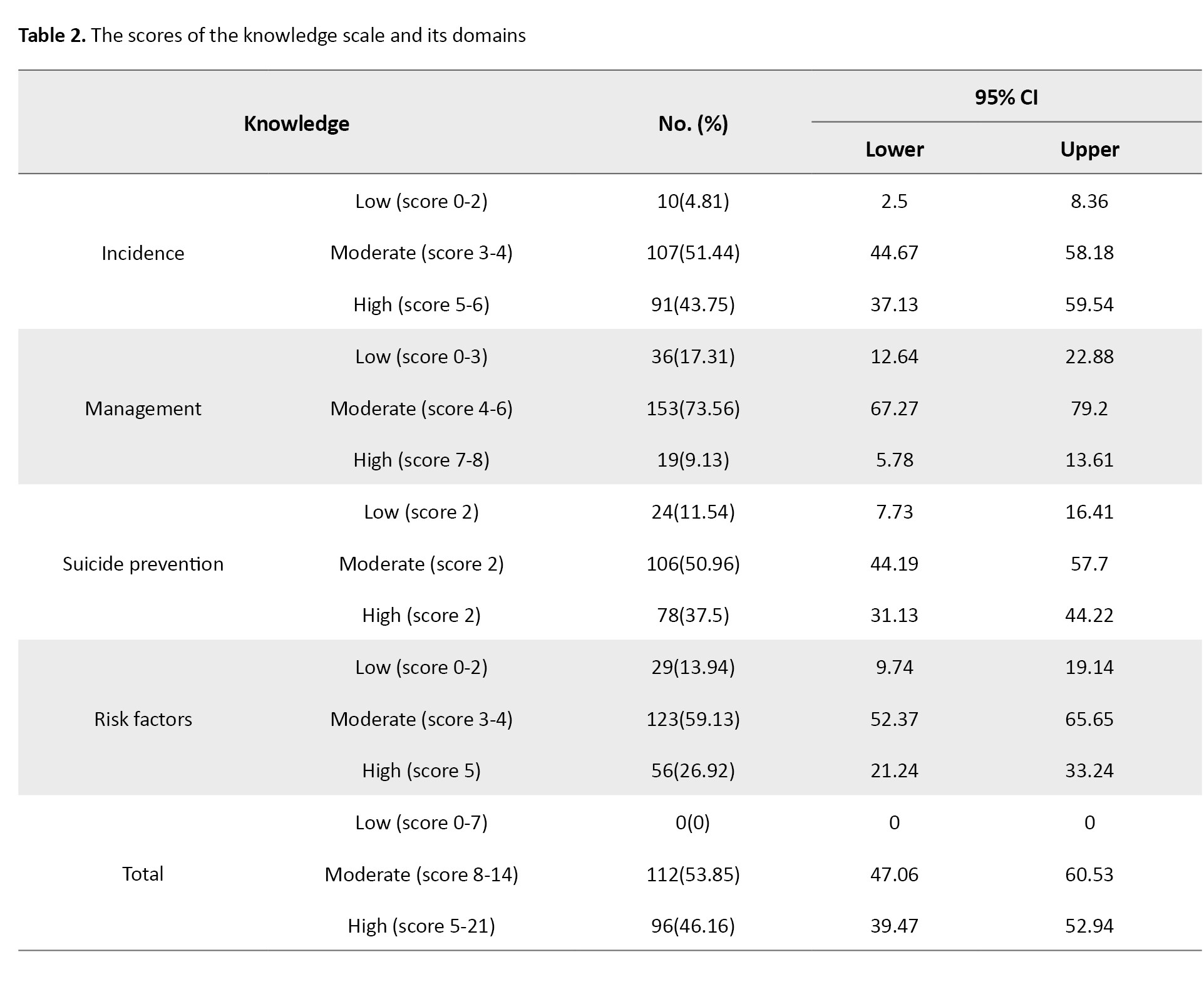
None of the nurses had a low knowledge. Regarding the domains of the knowledge scale, the highest level was for the incidence domain (43.7%), followed by suicide prevention (37.5%), risk factors (26.9%), and management (9.13%). According to Table 3, The nurses’ knowledge score in the knowledge of care from the range of 0-21 possible scores was equal to (14.05±2.43), the lowest score obtained was 8 and the highest was 19.
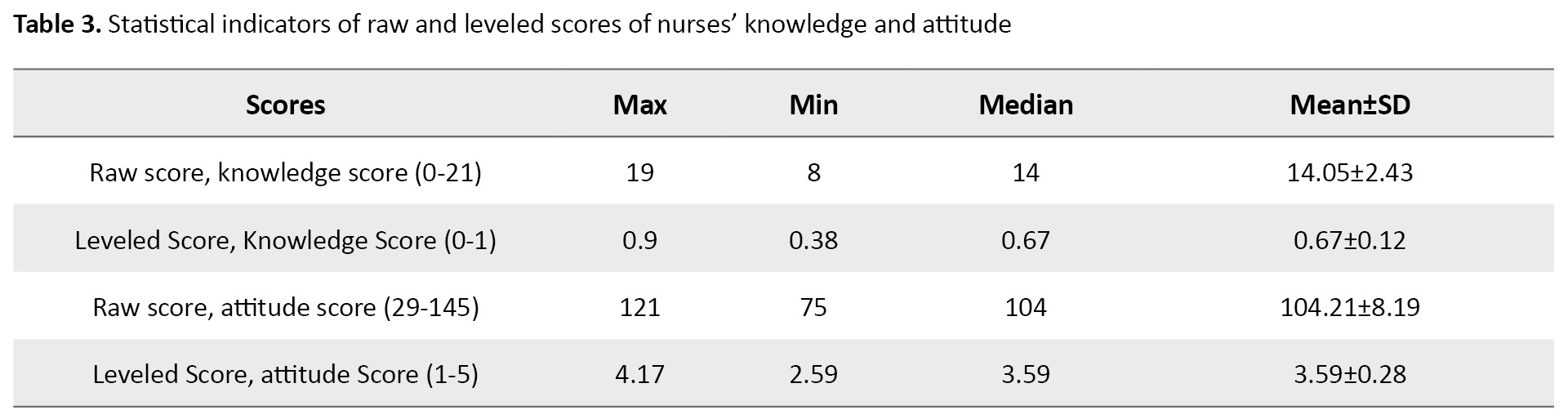
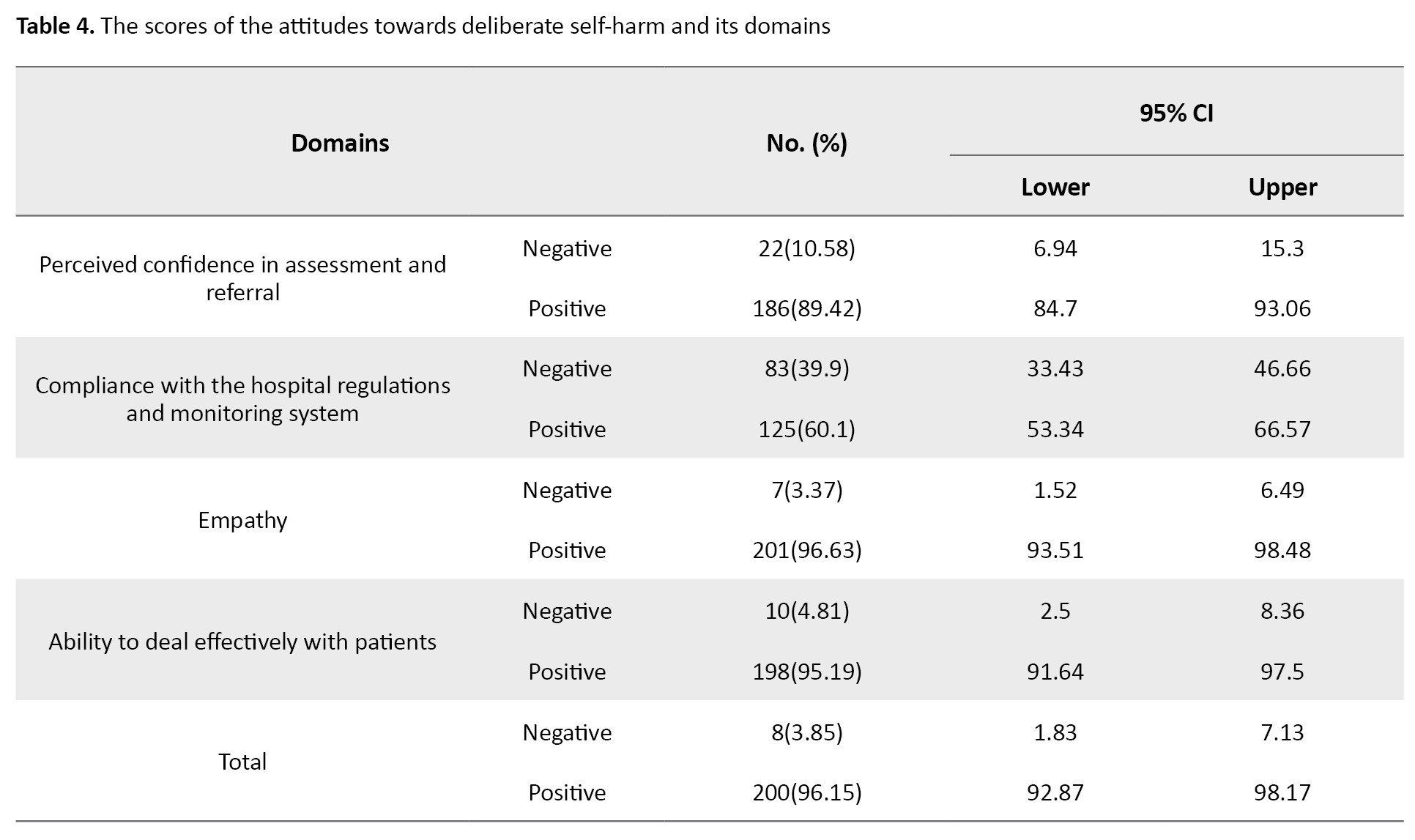
The scores were leveled from the range of 0-1 possible scores, and the average total knowledge score was (0.67±0.12). According to Table 4, 96.2% of the nurses had a positive attitude towards the care for self-harming adolescents, where the highest positive attitude level was for the empathy (96.6%) and effective dealing (95.2%) domains and the lowest score was for the compliance with hospital regulations domain (60.1%).
The results in Table 5 showed a positive correlation between the overall knowledge and ADSHQ scores (r=0.252, P=0.001).
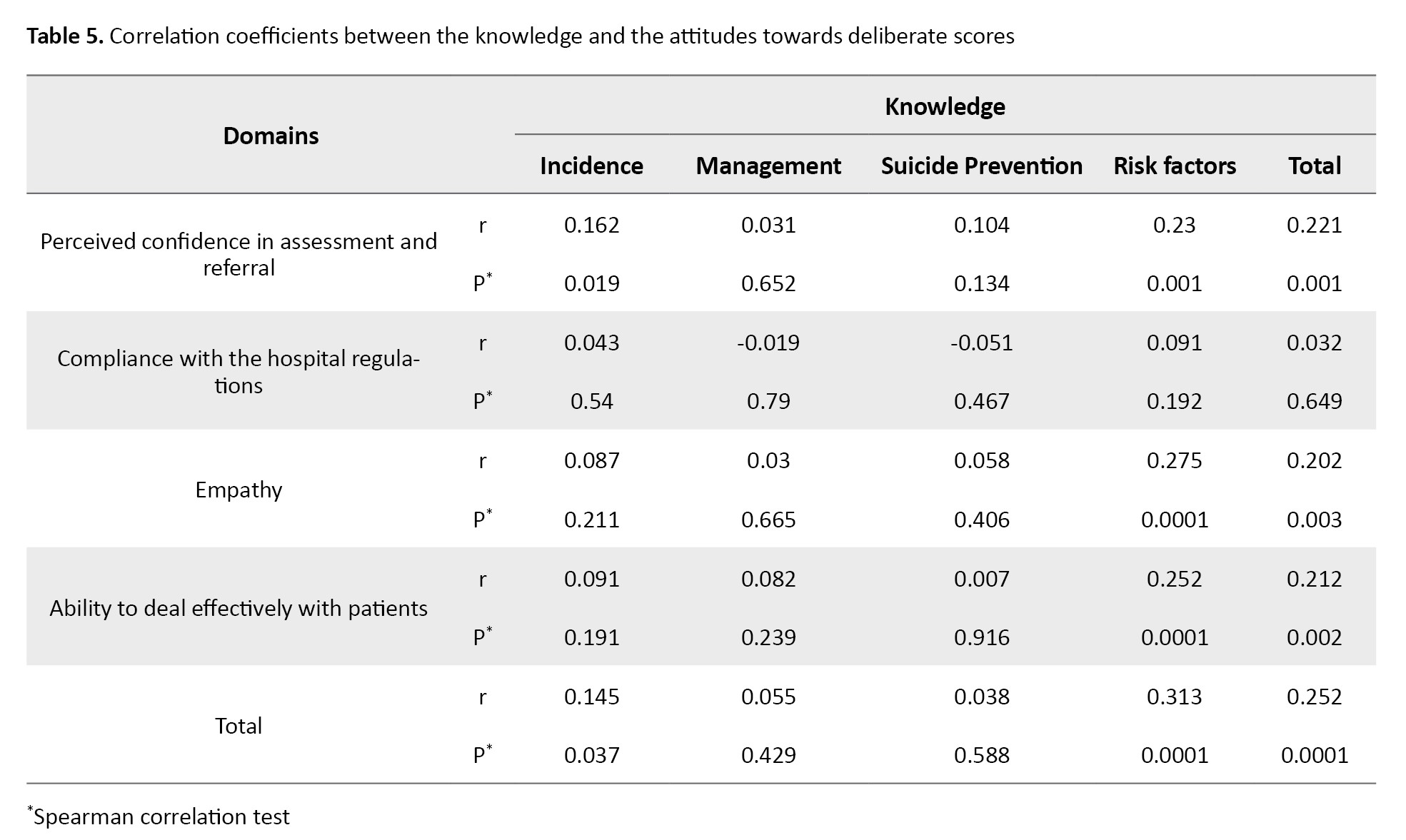
The score of the perceived confidence domain of the ADSHQ had a significant positive correlation with the scores of the incidence (r=0.162, P=0.019) and risk factors (r=0.230, P=0.001) domains of the knowledge scale, as well as the total knowledge score (r=0.221, P=0.001). The score of the empathy domain of the ADSHQ had a significant positive correlation only with the score of the risk factors domain (r=0.275, P=0.001) and the total score of the knowledge (r=0.202, P=0.003). The domain of ability to deal effectively with patients had a significant positive correlation with the risk factors domain (P=0.001, r=0.252) and total score of the knowledge (r=0.212, P=0.002). According to the coefficient of determination (R²=0.087), 8.7% of the changes in the attitude score can be explained by the knowledge score.
According to the results in Table 6, the knowledge score was significantly different based on nurses’ marital status (P=0.042) and experience in caring for self-harming adolescents (P=0.016).
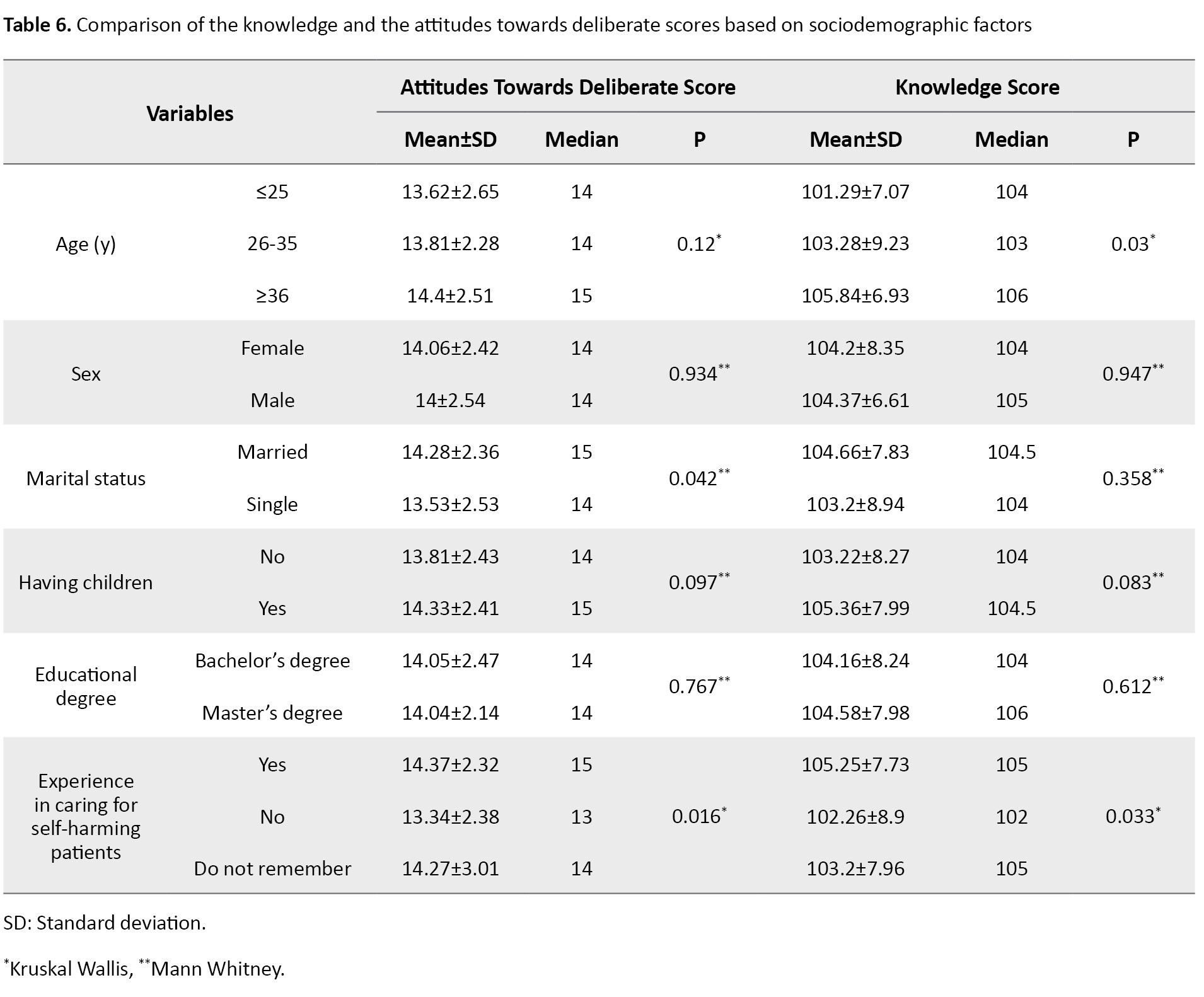
Married nurses had higher mean knowledge scores (14.3±2.4; median=15) compared to single nurses (13.5±2.5; median=14). Nurses with experience caring for self-harming adolescents had higher mean knowledge scores (14.4±2.3; median=15) than those without such experience (13.3±2.4; median=13). The ADSHQ score was significantly different based on nurses’ age (P=0.03) and experience in caring for self-harming adolescents (P=0.033). Older nurses and those with experience in caring for self-harming adolescents had higher ADSHQ scores compared to younger nurses and those without experience.
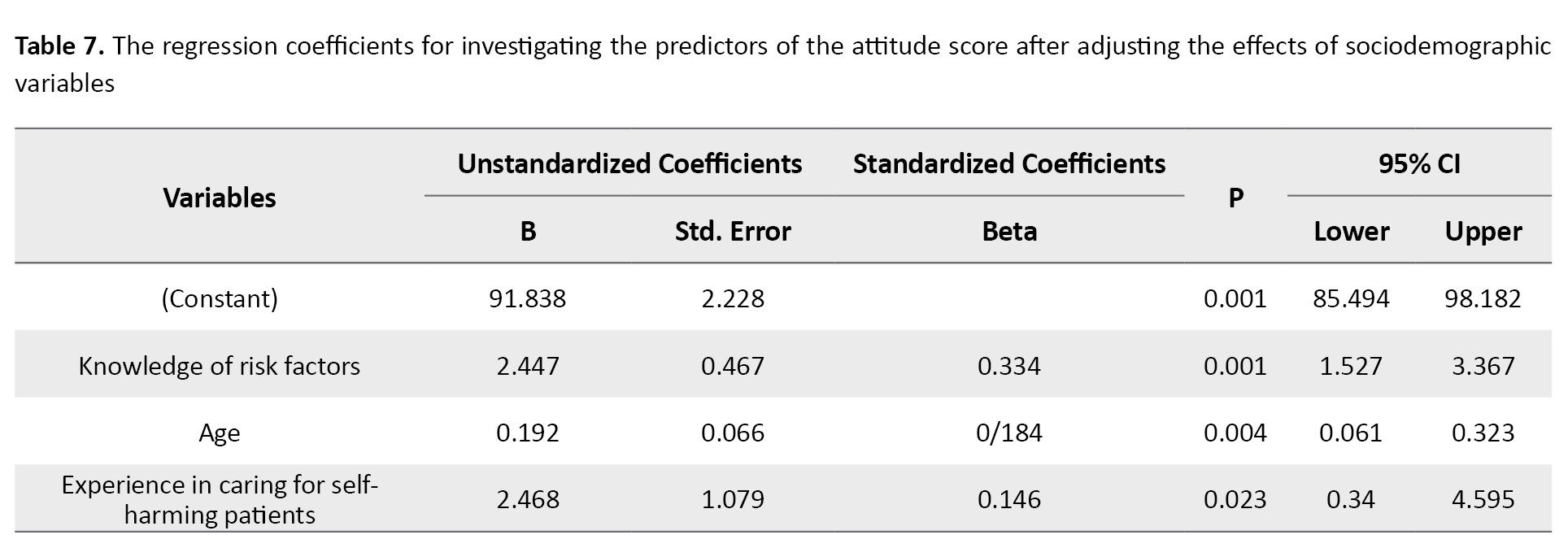
Table 6 presents the association between the domains of knowledge and ADSHQ in the multiple linear regression model after adjusting for individual variables such as age, gender, marital status, having children, educational degree, and experience in caring for self-harming adolescents. The significant factors for the ADSHQ score in the multiple regression model were the risk factors domain of the knowledge (β=0.334, 95%CI; 1.527%, 3.367%, P=0.001), age (β=0.184, 95% CI; 0.061%, 0.323%, P=0.004) and experience in caring for self-harming adolescents (β=2.4, 95% CI; 0.34%, 4.595%, P=0.023). Therefore, the knowledge of risk factors, age and experience in caring for self-harming adolescents were the predictors of the attitude score (Table 7).
Discussion
The results of this study indicate that the ED nurses had a moderate level of knowledge about the care for self-harming adolescents, which is consistent with the findings of Letho et al., who also reported that most of the nurses had moderate knowledge [17]. Kawanishi et al. found that nurses, nursing students, and psychiatric social workers had insufficient knowledge about suicide-related issues [23]. The moderate knowledge of nurses can be due to inadequate education, high job pressure, or the lack of in-service training based on evidence-based practice, which can negatively affect the treatment of self-harming adolescents. The knowledge domain of “risk factors” had the highest score among ED nurses. In contrast, Letho et al. reported that this domain had the lowest score in nurses, while the “suicide prevention” domain had the highest score [17]. There are limited studies on surveying nurses’ knowledge in different domains; therefore, the results of this study can pave the way for further studies in the future. Understanding the specific areas where nurses need education can enhance their knowledge and consequently improve their performance in treating self-harming adolescents.
In this study, nurses with experience in caring for self-harming adolescents had higher knowledge scores, consistent with the results of Letho et al. [17]. Experience in caring for self-harming adolescents may motivate nurses to improve their knowledge in this area through study and follow-up, enabling them to provide effective care. Thus, the results of this study highlight the importance of the related experience for having higher knowledge in ED nurses.
In this study, nurses had a positive attitude towards caring for self-harming adolescents, consistent with the studies by Perboell et al. and McCarthy [24, 25]. These studies showed that nurses experienced a range of positive emotions, such as understanding, interaction, and hope, when caring for patients hospitalized for self-harm. The nurses found that working with these adolescents could significantly improve their quality of life. However, Khajeddin et al. showed contrasting results [26]. The discrepancy may be due to cultural and local differences [27].
Cultural competence in nurses can improve their motivation to respect patient rights and have ethical and socially acceptable behaviors. There is a positive and significant relationship between nurses’ ethical beliefs and attitudes towards patient rights [28]. The findings of this study showed the highest percentage of positive attitudes towards the empathic approach and the highest rate of negative attitudes towards compliance with hospital regulations among the ED nurses, consistent with Perboell et al.’s findings [24]. These results underscore the importance of empathy in caring for self-harming adolescents.
We found a positive correlation between knowledge and attitude scores in the ED nurses, consistent with Letho et al.’s findings [17]. However, Wheatley et al. found no correlation between the domains of attitude and knowledge [29]. Moreover, the current study showed that, with increasing age, nurses’ attitudes towards self-harming adolescents improved, while Letho et al. found no significant relationship between age and attitude [17]. Our study also showed a significant difference in nurses’ attitudes among those with and without experience in caring for self-harming adolescents. With the increase in the years of work experience in the EDs, nurses seemed to be more confident in the assessment and referral of these patients.
This study showed that the knowledge of the ED nurses in northern Iran about the care for self-harming adolescents was moderate, and their attitudes were positive. Their attitude is positively correlated to their knowledge. The knowledge of the ED nurses is significantly different based on their marital status and experience in caring for self-harming adolescents, while their attitude is significantly different based on age and experience in caring for self-harming adolescents. Given the moderate knowledge of nurses, it is recommended to identify the educational needs of nurses and enhance their knowledge, thus fostering a positive change in their attitudes and improving their care for self-harming adolescents. Related educational materials should be integrated into the undergraduate nursing curriculum. The findings of this study can serve as a model for future studies in this field. Considering that the data collection of this study was done during the COVID-19 pandemic, the responses of nurses to the questions may be biased due to being busy, which can be considered a limitation of the present study.
Ethical Considerations
Compliance with ethical guidelines
Ethics approval was obtained from the Ethics Committee of Guilan University of Medical Sciences, Rasht, Iran (Code: IR.GUMS.REC.1399.413). Informed consent was obtained from all participants. They had the right to leave the study at any time and were assured of the confidentiality of their information.
Funding
The paper was extracted from the master’s thesis of Fereshteh Foroughizad, approved by Guilan University of Medical Sciences, Rasht, Iran. This study was funded by Guilan University of Medical Sciences, Rasht, Iran.
Authors' contributions
Study design: Yasaman Yaghobi, Farzaneh Shekhoeslami, and Fereshteh Foroughizad; Data analysis and interpretation Fereshteh Foroughizad and Yasaman Yaghobi; The initial draft preparation: Elnaz Faraji Nesfechi and Fereshteh Foroughizad; Statistical analysis: Ehsan Kazemnejad and Fereshteh Foroughizad; Supervision, administrative, technical, or material support, review and editing: Yasaman Yaghobi, Farzaneh Shekhoeslami, and Elnaz Faraji Nesfechi; Final approval: All authors.
Conflict of interest
The authors declared no conflict of interest.
Acknowledgments
The authors would like to thank the Deputy for Research and Technology of Guilan University of Medical Sciences, Rasht, Iran for the financial support, the managers of a hospital in Guilan Province, and the nurses who participated in this research for their cooperation.
References
Self-harm includes any self-inflicted injury or attempt to harm on oneself [1]. Non-suicidal self-injury refers to behaviors consciously and directly performed by the individual to harm body tissues without suicidal intent [2]. Adolescents engage in self-harming behaviors to regulate their current emotions. Self-harm is a way to cope with unbearable psychological pain or regain a sense of emotional balance [1, 2]. The rate of self-harm among children and young people is 7-14% [3]. In the United States, approximately 500,000 patients are admitted to emergency departments (EDs) annually due to deliberate self-harm [4]. In Northern Iran, a study reported a self-harm incidence rate of 54.9% among adolescents [5]. Another study in Iran found a self-harm prevalence of 12.3% among adolescents [6].
To reduce the risk of self-harm, it is important to identify the risk factors [7]. Adolescence is a developmental period characterized as a time of impulsive and risky choices, leading to an increased incidence of unintentional injury and violence [8, 9, 10]. Self-harming behaviors increase the serotonin and endorphin levels, resulting in feelings of pleasure and repetitive behavior [11]. Various factors, including environmental factors, family, friends, and genetic predisposition, may have a role in adolescents’ susceptibility to self-harming behaviors. There is evidence linking childhood trauma to a history of self-harm in adolescence [12, 13]. The risk of repeated self-harm is 18 times higher in individuals with a history of self-harm compared to the general population [13]. The complications of self-harm in adolescents include financial burdens on the healthcare system and significant on-time service delivery demands, as well as substantial psychological pressure on the affected families [14].
Nurses are an important part of the healthcare team, particularly in the EDs. Neglecting nurses’ education and attitudes towards self-harming patients can negatively affect the delivery of care and patient safety [15, 16]. Nurses’ attitudes towards self-harming patients and their knowledge of the issue can significantly influence their performance and patient outcomes [16]. The standard level of service management for adolescents with self-harm and the result of care are directly related to the knowledge and attitudes of nurses [17]. Therefore, sufficient knowledge and a positive attitude are necessary for delivering effective care to self-harming adolescents [18]. Various factors, including confidence in patient assessment, ability to effectively deal with patients, empathy, and ability to comply with hospital rules, can create a positive attitude in nurses [19].
The ED nurses should have a positive attitude, mutual understanding, and sufficient knowledge to treat self-harming adolescents professionally and appropriately upon admission [20, 21]. Caring for self-harming adolescents is emotionally challenging for nurses, and ambivalence, powerlessness, and inefficacy are often seen in negative attitudes towards these patients [20]. Given the importance of nurses’ attitudes and knowledge in providing care for self-harming adolescents, this study aims to determine the knowledge and attitudes of ED nurses in Rasht, Iran, regarding the care for self-harming adolescents and find the related factors.
Materials and Methods
This is an analytical cross-sectional study conducted from February to April 2021. The study population consisted of all nurses working in the ED of hospitals in Rasht, Iran. The required sample size was determined 249 based on the study by Letho et al. [17] and using the sample size formula based on a correlation by considering r=0.25, 95% confidence interval, and 90% test power. However, since the sampling included the whole population, 208 eligible nurses were included in the study. The inclusion criteria were: Having a bachelor’s or master’s degree, at least 6 months of work experience in the ED and willingness to participate in the study.
The study used a three-part questionnaire. The first part surveys demographic characteristics (age, gender, marital status, number of children, experience in caring for self-harming patients, work experience, educational degree). The second part was a knowledge scale developed by Letho et al. [17] included 24 items and four domains: Incidence (5 items), risk factors (4 items), management (5 items), and suicide prevention measures (7 questions). A score of 0 was for incorrect answers, while 1 was for correct answers. The total score ranges from 0 to 21. A score of 0-7 indicates low knowledge; 8-14, moderate knowledge; and 15-21, high knowledge. The third part was the attitudes towards deliberate self-harm questionnaire (ADSHQ) developed by McAllister et al. [13]. It has 29 items scored on a Likert scale and four domains, including: a) Perceived confidence in assessment and referral, (9 items) with a score range of 9-45, where a score of 9-22 indicates low confidence and a score of 23-37 shows high confidence; b) Ability to deal effectively with clients (6 items) with a score range of 6-24, where a score of 6-10 indicates low ability and a score of 11-24 shows high ability; c) Empathic approach (9 items) had a score range of 9-45, where a score of 9-21 indicates low ability and a score of 22-43 shows high ability; d) Ability to cope effectively with legal and hospital regulations that guide practice (5 items) with a score range of 5-25, where a score of 5-12 indicates low compliance and a score of 13-25 shows high compliance.
The knowledge and attitude items were adapted from the article by Leto and McAllister and a review of the literature, respectively. The number of items used in these tools was reduced due to the lack of conformity of some parts with respect to the cultural context of Iran. In the knowledge tool, 3 questions were removed. Of course, all steps were communicated to Leto and colleagues through correspondence. Similarly, 4 questions were removed from the attitude items. Therefore, after adjusting the items, their validity and reliability were also taken. In the present study, a qualitative and quantitative approach was used to determine the content validity. For this purpose, the questionnaire was reviewed by 10 expert professors of the nursing department (faculty members of the School of Nursing and Midwifery and experts in the fields of medical education, psychiatric nursing, pediatric nursing, internal and surgical nursing). In order to determine the content validity using a qualitative method, the professors were asked to provide their corrective comments in writing regarding the clarity and simplicity of the questionnaires. After collecting and reviewing the comments by the research team, the necessary changes were made to the instruments. To determine the content validity of the knowledge and attitude instrument quantitatively, Lawshe content validity ratio [22] and Waltz and Bassel’s content validity index [22] were used. After calculating the content validity ratio, it was determined that this value was greater than 0.62 for all items in the questionnaire and no items were deleted. After calculating the content validity ratio, the content validity index of the knowledge and attitude questionnaire was >0.88, therefore it is acceptable. [22]. The average CVI for the Persian versions of the two questionnaires were 0.97 and 0.95, respectively. For reliability, the test-retest method was used for the knowledge scale and ADSHQ. The intraclass correlation coefficient (ICC) for the Persian versions of the knowledge scale and ADSHQ were 0.89 and 0.86, respectively (P=0.001).
The data were collected after visiting the hospitals during all three work shifts (morning, afternoon, and night). The collected data were analyzed using descriptive and inferential statistics. The Kolmogorov-Smirnov test was used to test the normality of data distribution. Since the variables did not follow a normal distribution, non-parametric tests (Mann-Whitney U test and Kruskal-Wallis test) were employed. The Spearman correlation test was used to determine correlations, and multiple logistic regression models were used to adjust the effects of individual and organizational variables. The significance level was set at 0.05.
Results
The mean age of the participants was 34.8±7.8 years. The majority of them were female (90.9%) and married (69.2%). Also, 46.2% had children. The majority (88.5%) had a bachelor’s degree, while only 11.5% had a master’s degree. Most of the nurses (63%) had experience in caring for self-harming adolescents (Table 1).
Furthermore, most of the nurses (53.85%) had a moderate knowledge of self-harming in adolescents, and 46.16% had a high level of knowledge (Table 2).
None of the nurses had a low knowledge. Regarding the domains of the knowledge scale, the highest level was for the incidence domain (43.7%), followed by suicide prevention (37.5%), risk factors (26.9%), and management (9.13%). According to Table 3, The nurses’ knowledge score in the knowledge of care from the range of 0-21 possible scores was equal to (14.05±2.43), the lowest score obtained was 8 and the highest was 19.
The scores were leveled from the range of 0-1 possible scores, and the average total knowledge score was (0.67±0.12). According to Table 4, 96.2% of the nurses had a positive attitude towards the care for self-harming adolescents, where the highest positive attitude level was for the empathy (96.6%) and effective dealing (95.2%) domains and the lowest score was for the compliance with hospital regulations domain (60.1%).
The results in Table 5 showed a positive correlation between the overall knowledge and ADSHQ scores (r=0.252, P=0.001).
The score of the perceived confidence domain of the ADSHQ had a significant positive correlation with the scores of the incidence (r=0.162, P=0.019) and risk factors (r=0.230, P=0.001) domains of the knowledge scale, as well as the total knowledge score (r=0.221, P=0.001). The score of the empathy domain of the ADSHQ had a significant positive correlation only with the score of the risk factors domain (r=0.275, P=0.001) and the total score of the knowledge (r=0.202, P=0.003). The domain of ability to deal effectively with patients had a significant positive correlation with the risk factors domain (P=0.001, r=0.252) and total score of the knowledge (r=0.212, P=0.002). According to the coefficient of determination (R²=0.087), 8.7% of the changes in the attitude score can be explained by the knowledge score.
According to the results in Table 6, the knowledge score was significantly different based on nurses’ marital status (P=0.042) and experience in caring for self-harming adolescents (P=0.016).
Married nurses had higher mean knowledge scores (14.3±2.4; median=15) compared to single nurses (13.5±2.5; median=14). Nurses with experience caring for self-harming adolescents had higher mean knowledge scores (14.4±2.3; median=15) than those without such experience (13.3±2.4; median=13). The ADSHQ score was significantly different based on nurses’ age (P=0.03) and experience in caring for self-harming adolescents (P=0.033). Older nurses and those with experience in caring for self-harming adolescents had higher ADSHQ scores compared to younger nurses and those without experience.
Table 6 presents the association between the domains of knowledge and ADSHQ in the multiple linear regression model after adjusting for individual variables such as age, gender, marital status, having children, educational degree, and experience in caring for self-harming adolescents. The significant factors for the ADSHQ score in the multiple regression model were the risk factors domain of the knowledge (β=0.334, 95%CI; 1.527%, 3.367%, P=0.001), age (β=0.184, 95% CI; 0.061%, 0.323%, P=0.004) and experience in caring for self-harming adolescents (β=2.4, 95% CI; 0.34%, 4.595%, P=0.023). Therefore, the knowledge of risk factors, age and experience in caring for self-harming adolescents were the predictors of the attitude score (Table 7).
Discussion
The results of this study indicate that the ED nurses had a moderate level of knowledge about the care for self-harming adolescents, which is consistent with the findings of Letho et al., who also reported that most of the nurses had moderate knowledge [17]. Kawanishi et al. found that nurses, nursing students, and psychiatric social workers had insufficient knowledge about suicide-related issues [23]. The moderate knowledge of nurses can be due to inadequate education, high job pressure, or the lack of in-service training based on evidence-based practice, which can negatively affect the treatment of self-harming adolescents. The knowledge domain of “risk factors” had the highest score among ED nurses. In contrast, Letho et al. reported that this domain had the lowest score in nurses, while the “suicide prevention” domain had the highest score [17]. There are limited studies on surveying nurses’ knowledge in different domains; therefore, the results of this study can pave the way for further studies in the future. Understanding the specific areas where nurses need education can enhance their knowledge and consequently improve their performance in treating self-harming adolescents.
In this study, nurses with experience in caring for self-harming adolescents had higher knowledge scores, consistent with the results of Letho et al. [17]. Experience in caring for self-harming adolescents may motivate nurses to improve their knowledge in this area through study and follow-up, enabling them to provide effective care. Thus, the results of this study highlight the importance of the related experience for having higher knowledge in ED nurses.
In this study, nurses had a positive attitude towards caring for self-harming adolescents, consistent with the studies by Perboell et al. and McCarthy [24, 25]. These studies showed that nurses experienced a range of positive emotions, such as understanding, interaction, and hope, when caring for patients hospitalized for self-harm. The nurses found that working with these adolescents could significantly improve their quality of life. However, Khajeddin et al. showed contrasting results [26]. The discrepancy may be due to cultural and local differences [27].
Cultural competence in nurses can improve their motivation to respect patient rights and have ethical and socially acceptable behaviors. There is a positive and significant relationship between nurses’ ethical beliefs and attitudes towards patient rights [28]. The findings of this study showed the highest percentage of positive attitudes towards the empathic approach and the highest rate of negative attitudes towards compliance with hospital regulations among the ED nurses, consistent with Perboell et al.’s findings [24]. These results underscore the importance of empathy in caring for self-harming adolescents.
We found a positive correlation between knowledge and attitude scores in the ED nurses, consistent with Letho et al.’s findings [17]. However, Wheatley et al. found no correlation between the domains of attitude and knowledge [29]. Moreover, the current study showed that, with increasing age, nurses’ attitudes towards self-harming adolescents improved, while Letho et al. found no significant relationship between age and attitude [17]. Our study also showed a significant difference in nurses’ attitudes among those with and without experience in caring for self-harming adolescents. With the increase in the years of work experience in the EDs, nurses seemed to be more confident in the assessment and referral of these patients.
This study showed that the knowledge of the ED nurses in northern Iran about the care for self-harming adolescents was moderate, and their attitudes were positive. Their attitude is positively correlated to their knowledge. The knowledge of the ED nurses is significantly different based on their marital status and experience in caring for self-harming adolescents, while their attitude is significantly different based on age and experience in caring for self-harming adolescents. Given the moderate knowledge of nurses, it is recommended to identify the educational needs of nurses and enhance their knowledge, thus fostering a positive change in their attitudes and improving their care for self-harming adolescents. Related educational materials should be integrated into the undergraduate nursing curriculum. The findings of this study can serve as a model for future studies in this field. Considering that the data collection of this study was done during the COVID-19 pandemic, the responses of nurses to the questions may be biased due to being busy, which can be considered a limitation of the present study.
Ethical Considerations
Compliance with ethical guidelines
Ethics approval was obtained from the Ethics Committee of Guilan University of Medical Sciences, Rasht, Iran (Code: IR.GUMS.REC.1399.413). Informed consent was obtained from all participants. They had the right to leave the study at any time and were assured of the confidentiality of their information.
Funding
The paper was extracted from the master’s thesis of Fereshteh Foroughizad, approved by Guilan University of Medical Sciences, Rasht, Iran. This study was funded by Guilan University of Medical Sciences, Rasht, Iran.
Authors' contributions
Study design: Yasaman Yaghobi, Farzaneh Shekhoeslami, and Fereshteh Foroughizad; Data analysis and interpretation Fereshteh Foroughizad and Yasaman Yaghobi; The initial draft preparation: Elnaz Faraji Nesfechi and Fereshteh Foroughizad; Statistical analysis: Ehsan Kazemnejad and Fereshteh Foroughizad; Supervision, administrative, technical, or material support, review and editing: Yasaman Yaghobi, Farzaneh Shekhoeslami, and Elnaz Faraji Nesfechi; Final approval: All authors.
Conflict of interest
The authors declared no conflict of interest.
Acknowledgments
The authors would like to thank the Deputy for Research and Technology of Guilan University of Medical Sciences, Rasht, Iran for the financial support, the managers of a hospital in Guilan Province, and the nurses who participated in this research for their cooperation.
References
- Duarte TA, Paulino S, Almeida C, Gomes HS, Santos N, Gouveia-Pereira M. Self-harm as a predisposition for suicide attempts: A study of adolescents’ deliberate self-harm, suicidal ideation, and suicide attempts. Psychiatry Res. 2020; 287:112553. [DOI:10.1016/j.psychres.2019.112553] [PMID]
- Lurigio AJ, Nesi D, Meyers SM. Nonsuicidal self injury among young adults and adolescents: Historical, cultural and clinical understandings. Soc Work Ment Health. 2024; 22(1):122-48. [DOI:10.1080/15332985.2023.2264434]
- Latif A, Carter T, Rychwalska-Brown L, Wharrad H, Manning J. Co-producing a digital educational programme for registered children’s nurses to improve care of children and young people admitted with self-harm. J Child Health Care. 2017; 21(2):191-200. [DOI:10.1177/1367493517697853] [PMID]
- Bridge JA, Olfson M, Caterino JM, Cullen SW, Diana A, Frankel M, et al. Emergency department management of deliberate self-harm: A national survey. JJAMA Psychiatry. 2019; 76(6):652-4. [DOI:10.1001/jamapsychiatry.2019.0063] [PMID]
- Abdollahi E, Kousha M, Bozorgchenani A, Bahmani M, Rafiei E, Eslamdoust-Siahestalkhi F. Prevalence of self-harm behaviors and deliberate self-cutting in high school students in Northern Iran and its relationship with anxiety, depression, and stress. J Holistic Nurs Midwifery. 2022; 32(3):169-77. [DOI:10.32598/jhnm.32.3.2193]
- Izadi-Mazidi M, Yaghubi H, Mohammadkhani P, Hassanabadi H. Assessing the functions of non-suicidal self-injury: Factor analysis of functional assessment of self-mutilation among adolescents. Iran J Psychiatry. 2019; 14(3):184-91. [DOI:10.18502/ijps.v14i3.1319] [PMID]
- Olliac B, Ouss L, Charrier A. Suicide attempts in children and adolescents: The place of clock genes and early rhythm dysfunction. J Physiol Paris. 2016; 110(4 Pt B):461-6. [DOI:10.1016/j.jphysparis.2017.11.001] [PMID]
- Smith H, Wilson M, Donovan B, Jones J, Butler T, Nathan S, et al. Factors associated with unintended pregnancy and contraceptive practices in justice-involved adolescent girls in Australia. Plos One. 2024; 19(6):e0304825. [DOI:10.1371/journal.pone.0304825] [PMID]
- Carvalho CB, Arroz AM, Martins R, Costa R, Cordeiro F, Cabral JM. “Help Me Control My Impulses!”: Adolescent Impulsivity and Its Negative Individual, Family, Peer, and Community Explanatory Factors. J Youth Adolesc. 2023; 52(12):2545-58. [DOI:10.1007/s10964-023-01837-z] [PMID]
- Nesfechi EF, Pouralizadeh M, Khalesi ZB, Maroufizadeh S. Approaches and styles of mothers in sex education process of children and the related factors. BMC Nurs. 2023; 22(1):253. [DOI:10.1186/s12912-023-01410-w] [PMID]
- Favazza AR. The coming of age of self-mutilation. J Nerv Ment Dis. 1998; 186(5):259-68. [DOI:10.1097/00005053-199805000-00001] [PMID]
- Grandison G, Karatzias T, Fyvie C, Hyland P, O’Connor RC, Dickson A. Suicidal histories in adults experiencing psychological trauma: Exploring vulnerability and protective factors. Arch Suicide Res. 2022; 26(1):155-68. [DOI:10.1080/13811118.2020.1758262] [PMID]
- McAllister M, Creedy D, Moyle W, Farrugia C. Nurses’ attitudes towards clients who self-harm. J Adv Nurs. 2002; 40(5):578-86. [DOI:10.1046/j.1365-2648.2002.02412.x] [PMID]
- Wijana MB, Feldman I, Ssegonja R, Enebrink P, Ghaderi A. A pilot study of the impact of an integrated individual- and family therapy model for self-harming adolescents on overall healthcare consumption. BMC Psychiatry. 2021; 21(1):374. [DOI:10.1186/s12888-021-03375-z] [PMID]
- Faraji Nesfechi E, Yaghobi Y, Mir Hosseini S, Qolamalipour Garfami Z, Maroufizadeh S, Shaikhi Sanandaj F, et al . [Assessment of parents' knowledge and attitude with a child hospitalized with Covid-19 disease (Persian)]. J Pediatr Nurs. 2022; 9(2):77-88. [Link]
- Johnson DR, Ferguson K, Copley J. Residential staff responses to adolescent self-harm: The helpful and unhelpful. Clin Child Psychol Psychiatry. 2017; 22(3):443-54. [DOI:10.1177/1359104516689378] [PMID]
- Letho. Knowledge and attitudes towards suicide among nurses of national referral hospital in Bhutan [MA thesis]. Chon Buri: Burapha University; 2017. [Link]
- Ribeiro Coimbra LR, Noakes A. A systematic review into healthcare professionals’ attitudes towards self-harm in children and young people and its impact on care provision. J Child Health Care. 2022; 26(2):290-306. [DOI:10.1177/13674935211014405] [PMID]
- Stephen Ekpenyong M, Nyashanu M, Ossey-Nweze C, Serrant L. Exploring the perceptions of dignity among patients and nurses in hospital and community settings: An integrative review. J Res Nurs. 2021; 26(6):517-37. [DOI:10.1177/1744987121997890] [PMID]
- Rayner G, Blackburn J, Edward KL, Stephenson J, Ousey K. Emergency department nurse’s attitudes towards patients who self-harm: A meta-analysis. Int J Ment Health Nurs. 2019; 28(1):40-53. [DOI:10.1111/inm.12550] [PMID]
- Pintar Babič M, Bregar B, Drobnič Radobuljac M. The attitudes and feelings of mental health nurses towards adolescents and young adults with nonsuicidal self-injuring behaviors. Child Adolesc Psychiatry Ment Health. 2020; 14:37. [DOI:10.1186/s13034-020-00343-5] [PMID]
- Ayre C, Scally AJ. Critical values for Lawshe’s content validity ratio: Revisiting the original methods of calculation. Meas Eval Couns Dev. 2014; 47(1):79-86. [DOI:10.1177/0748175613513808]
- Kawanishi C, Sato R, Yamada T, Ikeda H, Suda A, Hirayasu Y. Knowledge and attitudes of nurses, nursing students and psychiatric social workers concerning current suicide-related issues in Japan. PrimCare Ment Health. 2006; 4(4):285-92. [Link]
- Perboell PW, Hammer NM, Oestergaard B, Konradsen H. Danish emergency nurses’ attitudes towards self-harm-a cross-sectional study. Int Emerg Nurs. 2015; 23(2):144-9. [DOI:10.1016/j.ienj.2014.07.003] [PMID]
- McCarthy L, Gijbels H. An examination of emergency department nurses’ attitudes towards deliberate self-harm in an Irish teaching hospital. Int Emerg Nurs. 2010; 18(1):29-35. [DOI:10.1016/j.ienj.2009.05.005] [PMID]
- Khajeddin N, Ghasemi Nezhad MA, Hooman F. [Comparison of Attitudes towards suicide and its Prevention in Medical Students before and after the Apprenticeship Course (Persian)]. Jundishapur Sci MedJ. 2013; 11(6):685-95. [Link]
- Červený M, Kratochvílová I, Hellerová V, Tóthová V. Methods of increasing cultural competence in nurses working in clinical practice: A scoping review of literature 2011-2021. Front Psychol. 2022; 13:936181. [DOI:10.3389/fpsyg.2022.936181] [PMID]
- Mahmoodi A, KHani L, GHafari M. [The relationship between cultural competence and responsibility with nurses ‘attitudes toward patients’ rights: The mediating role of ethical beliefs (Persian)]. Iran J Med Ethics Hist Med. 2016; 9(5):39-51. [Link]
- Wheatley M, Austin-Payne H. Nursing staff knowledge and attitudes towards deliberate self-harm in adults and adolescents in an inpatient setting. Behav Cogn Psychother. 2009; 37(3):293-309. [DOI:10.1017/S1352465809005268] [PMID]
Article Type : Research |
Subject:
General
Received: 2024/08/3 | Accepted: 2024/12/20 | Published: 2024/12/20
Received: 2024/08/3 | Accepted: 2024/12/20 | Published: 2024/12/20
Send email to the article author
| Rights and permissions | |
 | This work is licensed under a Creative Commons Attribution-NonCommercial 4.0 International License. |

Copyright © The Author(s);
This is an open access article distributed under the terms of the Creative Commons Attribution License (CC-By-NC), which permits use, distribution, and reproduction in any medium, provided the original work is properly cited and is not used for commercial purposes.
Contact Information